
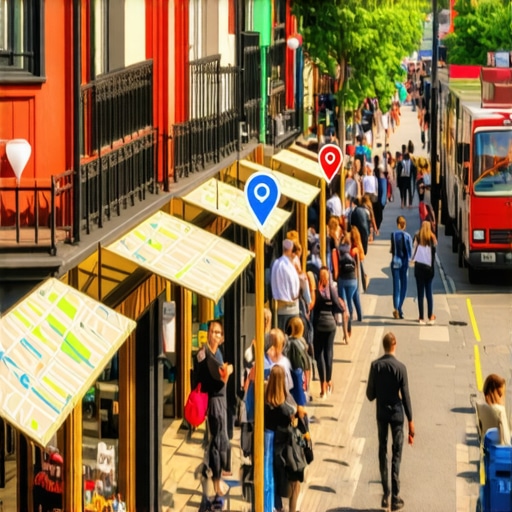
How Hyperlocal Geo Pages Actually Double Your District Foot Traffic
If you are running a business in Washington DC, you’ve likely felt the “Proximity Trap.” You might have a thriving storefront in Adams Morgan, yet you are completely invisible to a high-intent customer searching from a brownstone in Capitol Hill. This isn’t an accident; it’s the result of how Google’s local algorithm draws a tight circle around the user’s physical location. As a google business profile seo expert, I’ve seen countless District businesses lose thousands in revenue simply because they haven’t bridged the gap between “near me” searches and their actual physical location. This is where Hyperlocal Geo Pages come in. I’m Tim Capper, and I’ve spent years helping businesses break through these “ghosting” issues by leveraging technical, neighborhood-specific signals that tell Google exactly where you deserve to rank. If you want to double your foot traffic across the Wards, you have to stop thinking about DC as one city and start treating it as a collection of distinct micro-markets.
Why Proximity is the “Silent Killer” of DC Small Business Growth
The Google Maps algorithm is built on three primary pillars: Proximity, Relevance, and Prominence. In a dense urban environment like the District, proximity often becomes the loudest signal, sometimes to the detriment of the best businesses. You could have the highest-rated dental practice in Foggy Bottom, but if someone is searching from Navy Yard, Google is more likely to show them a closer, albeit lower-rated, competitor. This “Proximity Filter” is the silent killer of growth for DC small businesses that rely on foot traffic from across the city.
Washington DC’s unique ward structure and neighborhood identities create distinct search silos. Someone in Ward 6 has a different search intent and geographic expectation than someone in Ward 3. Research from ECI Solutions confirms that while generic content might attract global or national visitors, geo-specific content is what actually converts local customers into physical visits. Similarly, Uberall has noted that hyperlocal marketing leads to “Increased Relevance and Engagement,” which directly correlates to boosted foot traffic. When your content speaks to the specific streets, landmarks, and vibes of a neighborhood, you are signaling to Google that your business is highly relevant to that specific micro-location.
To truly scale, you have to understand Why Your Business Disappears From Search Results Just Two Blocks Away. Without a strategy to expand your “relevance radius,” you are essentially trapped within a few blocks of your front door. By implementing google business profile seo strategies that include hyperlocal geo pages, you can effectively tell Google’s algorithm that your prominence extends beyond your immediate proximity, allowing you to capture traffic from the other side of the Anacostia or across the park.
The Anatomy of a High-Converting Hyperlocal Geo Page
Building a geo page isn’t just about slapping a neighborhood name in a title tag. It requires a technical blueprint that satisfies both the human reader and the Google crawler. To get this right, you need to understand the components that make a page “hyperlocal” in the eyes of an algorithm. Before you even start writing, it is wise to use a google business profile seo audit tool to identify where your current gaps lie in terms of regional visibility.
Hyperlocal NAP Consistency
Your Name, Address, and Phone number (NAP) are the bedrock of local trust. However, for a geo page, you must ensure that your NAP is presented in a way that reinforces your connection to the District. This means using a local 202 area code and ensuring your address matches your Google Business Profile (GBP) exactly. Even minor discrepancies can dilute your ranking power. If you are targeting a specific Ward, ensure your contact information is clearly visible and marked up with Schema so search engines can instantly verify your location.
Neighborhood-Specific Content
Generic content is a commodity; local context is an asset. To rank in a specific neighborhood, you need to mention it – and not just in the headers. Talk about local landmarks like The Wharf, the greenery of Rock Creek Park, or the proximity to a specific Metro stop like Union Station or Dupont Circle. This level of detail proves to Google that your page isn’t a template. It shows you understand the geography of the customer you are trying to reach. This is a core part of How We Fixed a DC Shop’s Local Content Strategy to Actually Convert Ward 6 Traffic.
Google Maps Embeds
One of the most underutilized tactics is the strategic map embed. Don’t just embed a generic map of DC; embed a map that shows your business location in relation to the specific neighborhood you are targeting. This reinforces the geographic link between your business and the target area. This map embed strategy is a cornerstone for those looking to outrank neighbors who are technically closer to the searcher. For more on this, check out The Map Embed Strategy That Finally Helped a DC Shop Outrank Its Neighbors.
Using google maps seo tools from https://seovipertools.com can help you visualize how these embeds and content changes affect your ranking over time, ensuring your technical efforts translate into actual Map Pack movement.
How Geo Pages Influence the Google Map Pack Proximity Filter
Many business owners wonder how a landing page on their website can possibly affect their ranking in the Google Map Pack. The answer lies in the concept of “Local Justifications.” You’ve likely seen those little snippets in the Map Pack that say, “Their website mentions…” or “Sold here…” This is Google pulling data directly from your website to justify why they are showing your business for a specific query. By creating robust hyperlocal geo pages, you are feeding Google the exact phrases it needs to justify placing you in the top 3, even if you are a few miles away from the searcher.
This is the technical heart of google business profile seo. Your website acts as the “relevance engine” for your GBP. When you optimize a page for “Emergency Plumber in Georgetown,” you are providing the relevance signal that allows Google to bypass the strict proximity filter. If your website is the most authoritative source for plumbing services in Georgetown, Google is more likely to show your GBP to a user in that neighborhood, even if your physical shop is in Arlington or NE DC. To master this, you must learn How to Beat the Proximity Filter and Rank Across Every Ward in the District.
Furthermore, these pages help you implement 7 No-Fluff Tactics to Solidify Your Spot in the DC Map Pack Top 3. By creating a network of geo-targeted pages, you are essentially building a “moat” around your business, making it harder for competitors to displace you. You are no longer just a business in DC; you are the preferred provider for Capitol Hill, Chevy Chase, and Brookland individually.
5 Steps to Build Your First District Geo Page (2026 Strategy)
As we move into 2026, the complexity of local search continues to evolve. You cannot rely on 2020 tactics. Here is the modern checklist for building a geo page that actually drives calls and foot traffic.
- 1. Pick a Target Ward or Neighborhood: Don’t try to target the whole city at once. Start with the Wards where you already have some customers but want more. Use local seo software like SEO Viper Tools to identify where your current rankings are “on the bubble” (positions 4-10) and target those areas first.
- 2. Gather Local Reviews: Social proof is neighborhood-specific. If you are building a page for Ward 6, feature reviews from customers who live in Navy Yard or Capitol Hill. Mentioning these specific locales in the reviews adds another layer of geographic relevance.
- 3. Implement Local Schema Markup: This is non-negotiable. Use
LocalBusinessandPostalAddressschema to explicitly tell Google’s bots which neighborhood the page serves. For advanced users, The Specific Schema Move That Puts Your DC Shop in Front of High-Intent Callers can be a game-changer. - 4. Add Geo-Tagged Photos: In 2026, the metadata in your images still plays a role in how Google understands your service area. Upload high-quality photos of your team working in the specific neighborhood. Photos of your truck parked near the National Mall or a job site in Petworth provide visual and data-driven proof of your local presence.
- 5. Track Results with Precision: You cannot manage what you do not measure. Use a google maps rank tracker to see how your visibility grows in the specific neighborhood after the page is indexed.
By following these steps, you are not just creating a page; you are creating a localized asset. This is vastly different from the “set it and forget it” mentality that keeps most businesses stuck on page two. If you find your rankings aren’t moving, you might have The One Hidden Setting Keeping Your Business Off the DC Map Pack, which often involves a conflict between your website data and your GBP settings.
Common Mistakes: Why Your Geo Pages Aren’t Driving Calls
The most common failure I see in google business profile optimization is the use of “Thin Content.” Many agencies will sell you 20 city pages that are exactly the same, with only the neighborhood name swapped out. Google is incredibly good at detecting these “doorway pages.” If you swap “Georgetown” for “Foggy Bottom” but the rest of the 500 words are identical, you aren’t providing value – you’re spamming. This can lead to a site-wide penalty or, at the very least, Google ignoring those pages entirely.
Another mistake is neglecting the power of local backlinks. A link from a neighborhood blog in Takoma Park carries more weight for your Takoma Park geo page than a generic link from a national directory. This is why Why Neighborhood Backlinks Drive More Foot Traffic Than Generic Links is a core concept in my consulting. You need to ground your geo pages in the local digital ecosystem of the District.
Finally, avoid the temptation of quick fixes. Many DC business owners get burned by low-quality services. Understanding Why Bulk Citation Packages Often Make DC Businesses Look Like Spam to Google is crucial. Quality over quantity is the rule in 2026. One well-crafted, highly relevant geo page is worth more than fifty thin, automated pages that offer no real value to a DC resident looking for a service.
Conclusion & The Path to Local Dominance
Dominating the Washington DC market requires more than just a google business profile seo strategy; it requires a commitment to hyperlocal relevance. Foot traffic is the direct result of showing up when and where your customers are looking. By breaking down the proximity barrier with high-quality, technically sound geo pages, you stop being a “ghost” in the neighboring Wards and start becoming a local authority.
The District is a competitive landscape, but most of your competitors are still using generic tactics. Stop using a shotgun approach and start using a sniper’s precision. Focus on the Wards that matter to your bottom line. If you’re ready to scale your local presence, I invite you to audit your profile or explore SEO Viper‘s google maps ranking service to automate your tracking and optimization. The traffic is there – you just need to show Google you belong in the neighborhood.